
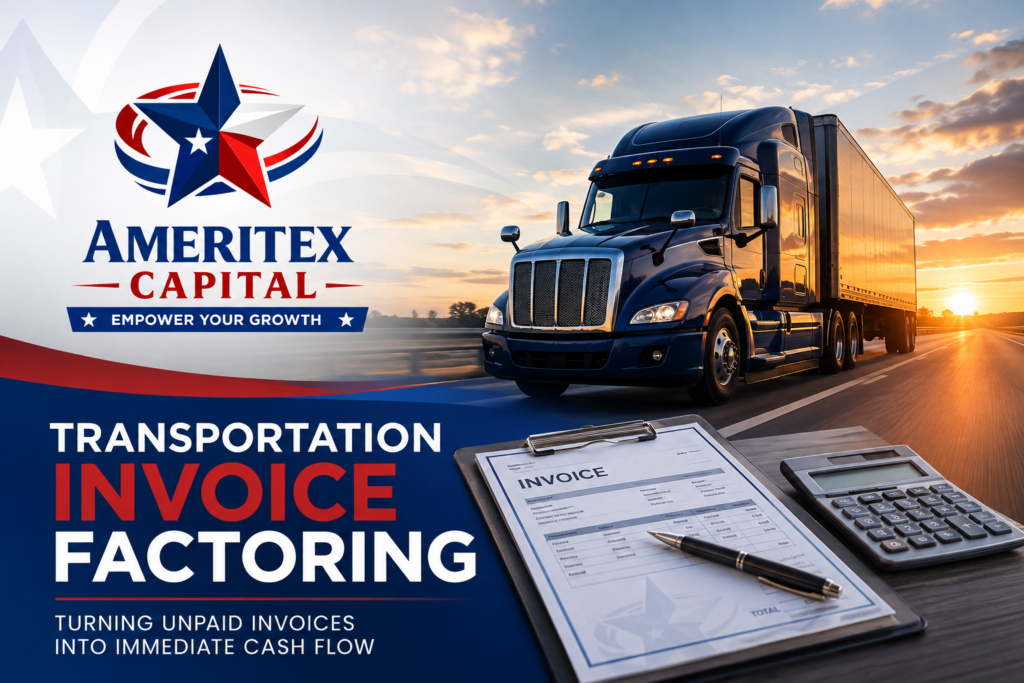
Transportation Invoice Factoring in Today’s Economy
For trucking companies, cash flow can be just as important as the freight they haul. A carrier may complete a load today, but the broker or shipper may not pay the resulting invoice for 30, 60, or even 90 days.
Meanwhile, the bills continue.
Fuel, driver payroll, insurance, truck payments, maintenance, repairs, tolls, permits, and other operating expenses have to be paid on schedule. When a carrier has to wait weeks to collect on completed loads, even a profitable transportation business can experience a serious working-capital shortage.
That’s where Transportation Factoring can help.
Transportation factoring, also known as freight factoring or trucking invoice factoring, allows eligible trucking companies to convert outstanding freight invoices into working capital instead of waiting weeks for customers to pay.
For carriers dealing with today’s changing freight market, faster access to cash can provide the flexibility needed to keep trucks moving, accept additional loads, meet payroll, and manage day-to-day operating expenses.
The result is simple: the carrier doesn’t have to let slow-paying customers dictate its cash flow.
Why Trucking Companies Need Better Cash Flow Management
The transportation industry has experienced significant changes during 2026. Industry data shows tighter truckload capacity, rising spot and contract rates, continued carrier exits, and pressure from fuel and other operating costs.
For transportation companies, this creates both opportunities and challenges.
A carrier may have more opportunities to haul profitable freight, but taking advantage of those opportunities requires sufficient working capital.
Consider some of the expenses a trucking company may have before it gets paid for a completed load:
- Diesel and fuel-related expenses
- Driver payroll
- Truck and trailer payments
- Commercial insurance
- Repairs and maintenance
- Tires and parts
- Tolls
- Permits and registration
- Dispatch and administrative expenses
- Factoring and other business expenses
When revenue is tied up in unpaid invoices, carriers can be forced to turn down loads or rely on credit cards and other short-term borrowing.
Transportation factoring helps bridge that gap.
How Transportation Factoring Works
The process is generally straightforward.
1. Haul the Load
The trucking company completes the shipment according to the broker’s or shipper’s requirements.
2. Submit the Invoice
After delivery, the carrier submits the completed invoice and required supporting documentation to the factoring company.
3. Receive an Advance
Once the invoice is approved and eligible for factoring, the factoring company provides an advance based on the terms of the agreement.
4. The Customer Pays
The broker or shipper pays the factored invoice according to its normal payment terms.
5. Receive the Remaining Reserve
After the customer pays, the factoring company releases the remaining reserve to the carrier, less the applicable factoring fee.
This process allows a transportation company to turn completed work into working capital much faster than waiting for traditional payment terms.
Who Can Benefit From Transportation Factoring?
Transportation factoring can be useful for a wide range of trucking businesses, including:
- Owner-operators
- New trucking companies
- Small and mid-sized fleets
- Established carriers
- Expedited freight companies
- Dry van carriers
- Reefer carriers
- Flatbed carriers
- Specialized transportation companies
- Freight brokers, where applicable
The key consideration is generally the quality and collectability of the underlying accounts receivable.
That can make factoring particularly attractive to newer transportation businesses. A company may have limited operating history or difficulty qualifying for conventional bank financing while still working with creditworthy brokers and shippers.
Transportation Factoring Can Help New Trucking Companies Grow
Starting a trucking company requires significant upfront capital.
A new carrier may need money for equipment, insurance, fuel, maintenance, payroll, permits, and other expenses before it has established a consistent cash-flow cycle.
Even after securing customers and hauling loads, the carrier may still have to wait weeks to collect its invoices.
Factoring can help shorten that cash-flow cycle.
Instead of waiting for customers to pay before having the money necessary to operate the next load, a carrier can potentially access working capital from eligible invoices sooner.
This can make it easier to:
- Keep fuel tanks full
- Meet payroll
- Handle unexpected repairs
- Maintain trucks and trailers
- Accept additional loads
- Manage seasonal expenses
- Reduce dependence on credit cards
- Maintain more predictable working capital
Transportation Factoring Is Not a Traditional Bank Loan
One of the biggest advantages of invoice factoring is that it is fundamentally different from traditional business borrowing.
With traditional financing, a company generally borrows money and takes on a repayment obligation.
With factoring, the transaction is based on eligible accounts receivable under the terms of the factoring agreement. The carrier receives an advance against invoices that are expected to be paid by its customers.
That distinction can make factoring an attractive alternative for transportation companies that want to improve cash flow without relying exclusively on conventional bank loans or additional credit.
However, factoring agreements vary, so carriers should carefully review the advance rate, fees, reserves, recourse provisions, and other terms before entering into an agreement.
Recourse vs. Non-Recourse Transportation Factoring
Transportation companies may encounter both recourse and non-recourse factoring programs.
Recourse Factoring
With recourse factoring, the carrier may remain responsible for certain invoices that are not collected, depending on the circumstances and the agreement.
Recourse programs may offer competitive pricing because the factoring company assumes less credit risk.
Non-Recourse Factoring
With non-recourse factoring, the factoring company may assume certain customer credit risks, subject to the specific terms, exclusions, and conditions of the agreement.
Non-recourse factoring does not necessarily mean every unpaid invoice is automatically protected. Carriers should understand exactly what risks are covered before selecting a program.
A knowledgeable factoring company can explain the differences and help a carrier determine which structure is appropriate for its business.
Why Transportation Factoring Matters in 2026
The 2026 freight market is demonstrating how quickly conditions can change.
ACT Research reported that June 2026 aggregate truckload spot rates excluding fuel were up substantially year over year, while contract rates were also higher. Other industry sources have reported tighter capacity, elevated tender rejection rates, and increasing pressure on transportation pricing.
At the same time, fuel remains an important operating-cost variable for carriers. Industry analysts continue to identify fuel volatility and transportation costs as important factors affecting trucking profitability.
In this environment, cash-flow management becomes increasingly important.
A carrier that can access working capital from completed loads may be better positioned to take advantage of profitable freight opportunities while maintaining the funds necessary to operate its fleet.
Benefits of Transportation Factoring
The right factoring program can provide several important benefits.
Faster Access to Working Capital
Instead of waiting weeks for customers to pay, carriers can potentially access funds from eligible invoices much sooner.
More Predictable Cash Flow
Factoring can help reduce the gap between completing a load and receiving payment.
Less Dependence on Traditional Bank Financing
Factoring provides an alternative way to obtain working capital based on accounts receivable.
Ability to Take More Loads
When cash is available to pay fuel, drivers, maintenance, and other expenses, carriers may be better positioned to accept additional freight.
Easier Management of Operating Expenses
Regular access to working capital can help transportation companies manage recurring expenses without waiting for customer payment cycles.
Credit Support
Depending on the program, a factoring company may also provide customer credit information that can help carriers evaluate the creditworthiness of brokers and shippers before accepting loads.
Why Choose Ameritex Capital for Transportation Factoring?
Ameritex Capital provides transportation companies with access to flexible working-capital solutions designed around the realities of the trucking industry.
Instead of treating every transportation company like a traditional bank borrower, Ameritex Capital focuses on helping eligible carriers convert their outstanding invoices into usable working capital.
Whether you’re an owner-operator with one truck or manage a growing fleet, the objective is the same:
Help you get access to the cash you’ve already earned so you can keep your business moving.
Ameritex Capital can help transportation businesses explore factoring options based on their customers, invoices, cash-flow requirements, and business objectives.
Get the Working Capital Your Trucking Business Needs
Your trucks shouldn’t have to sit idle because your customers take weeks to pay.
You’ve already hauled the load. The freight was delivered. You’ve already earned the revenue.
Transportation factoring can help turn those outstanding invoices into working capital sooner.
If you’re looking for a flexible alternative to traditional business financing, Ameritex Capital can help you explore your transportation factoring options.
Contact Ameritex Capital today to discuss your trucking company’s cash-flow needs and learn how Transportation Factoring can help keep your business moving forward.
Keep Your Trucks Moving. Keep Your Cash Flow Working.
Ameritex Capital — Transportation Factoring Solutions for Trucking Companies Nationwide.